- 1
- 2
- 3
ELIQUIS is indicated to reduce the risk of stroke and systemic embolism in adult patients with nonvalvular atrial fibrillation (NVAF).
Eliquis indicated for the treatment of adults with deep vein thrombosis (DVT) and pulmonary embolism (PE), and to reduce the risk of recurrent DVT and PE following initial therapy.
Eliquis is indicated for the prophylaxis of deep vein thrombosis (DVT), which may lead to pulmonary embolism (PE), in adult patients who have undergone hip or knee replacement surgery.
Contact us
XFor your convenience, specialized Bristol Myers Squibb representatives are available by phone or email to help you with your medical, technical, or general inquiries.
General and technical inquiries
(877) 517-6326 (Monday–Friday, 8 AM–8 PM ET)
Adverse event or product quality complaints
Medical information inquiries
BMSMedInfo.com to search online or email your inquiry (login or registration required)
(800) 321-1335 (Monday–Friday, 8 AM–5 PM ET)



Please review COBRRA in the context of results of the registrational trial, AMPLIFY.
The COBRRA Trial: First head-to-head randomized clinical trial comparing ELIQUIS vs XARELTO® (rivaroxaban) in adults with acute VTE1,2
The COBRRA trial was a multicenter, prospective, randomized, open-label, blinded endpoint (PROBE) trial.1
Please see Study Design below.
Key limitations: This open-label study was only designed to detect differences in clinically relevant bleeding between ELIQUIS and XARELTO and was not powered to assess differences in recurrent VTE or other secondary outcomes. The 3-month treatment duration differs from registrational trials and limits conclusions beyond this time frame. Findings are not generalizable to excluded populations, including patients with active malignancy or weight >120 kg.1,3,4 Please see additional Limitations of Analysis.
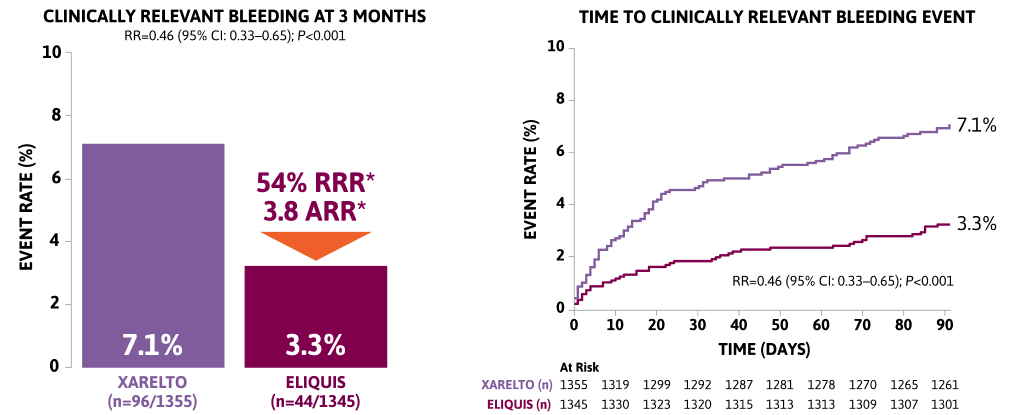
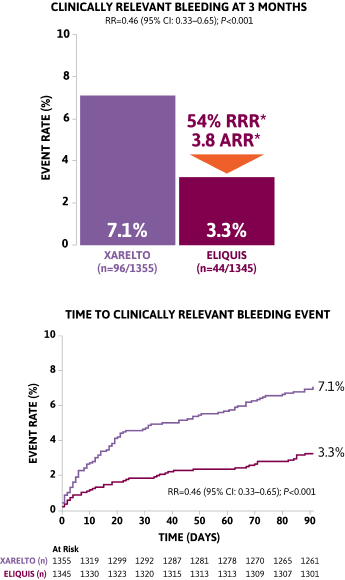
ELIQUIS was superior to XARELTO in the risk of clinically relevant bleeding1
ELIQUIS increases the risk of bleeding and can cause serious, potentially fatal, bleeding.3
Primary outcome was adjudicated clinically relevant bleeding over 3 months, defined as a composite of major bleeding or CRNM bleeding events.1,2
- Serious adverse reactions, excluding those related to bleeding or VTE, were reported in 2.7% (n=36/1345) of ELIQUIS-treated patients and 2.2% (n=30/1355) of XARELTO-treated patients1,5
The definitions of outcomes, treatment period, follow-up period, and the patient population in AMPLIFY were different than in this analysis.1-3
Other studies (RWD analyses) in adult patients comparing ELIQUIS with other DOACs, which may have used different methods, populations, and outcome definitions, have shown different findings.6-15
* Statistical note: RRR was calculated as (1−RR)×100. ARR represents the difference between the event rates.
The New England Journal of Medicine® is a registered trademark of the Massachusetts Medical Society.
XARELTO® (rivaroxaban) is a registered trademark of Bayer Aktiengesellschaft.
ARR=absolute risk reduction; CI=confidence interval; COBRRA=Comparison of Bleeding Risk between Rivaroxaban and Apixaban; CRNM=clinically relevant nonmajor; DOAC=direct oral anticoagulant; DVT=deep vein thrombosis; PE=pulmonary embolism; RCT=randomized clinical trial; RR=relative risk; RRR=relative risk reduction; RWD=real-world data; VTE=venous thromboembolism.
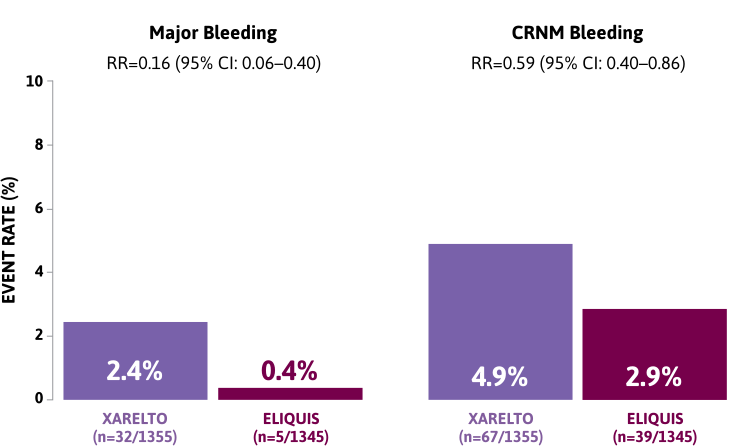
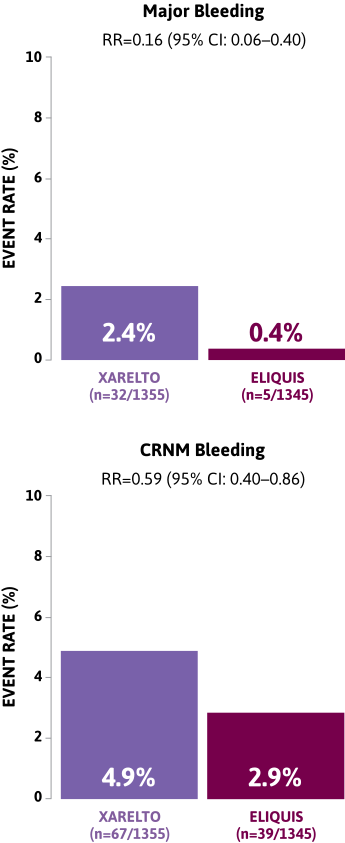
These secondary outcomes were not adjusted for multiplicity. The intervals should not be used in place of hypothesis testing.
ELIQUIS increases the risk of bleeding and can cause serious, potentially fatal, bleeding.3
These secondary outcomes comprise the primary outcome of clinically relevant bleeding, which was defined as a composite of major bleeding or CRNM bleeding events.
- Serious adverse reactions, excluding those related to bleeding or VTE, were reported in 2.7% (n=36/1345) of ELIQUIS-treated patients and 2.2% (n=30/1355) of XARELTO-treated patients1,5
The definitions of outcomes, treatment period, follow-up period, and the patient population in AMPLIFY were different than in this analysis.1-3
Other studies (RWD analyses) in adult patients comparing ELIQUIS with other DOACs, which may have used different methods, populations, and outcome definitions, have shown different findings.6-15
CI=confidence interval; CRNM=clinically relevant nonmajor; DOAC=direct oral anticoagulant; RR=relative risk; RWD=real-world data; VTE=venous thromboembolism.
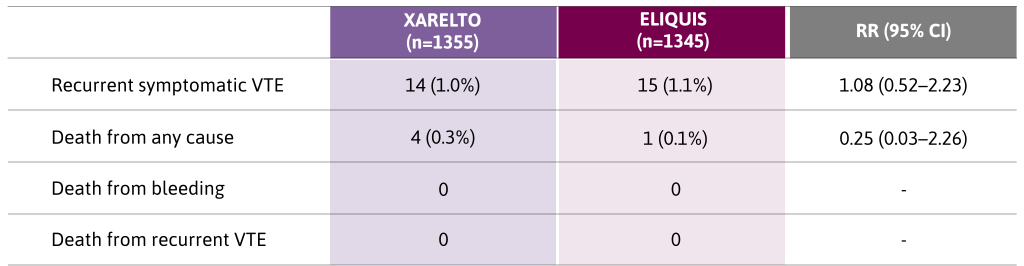
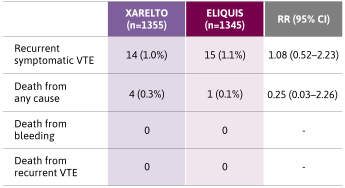
These secondary outcomes were not adjusted for multiplicity. The intervals should not be used in place of hypothesis testing.
ELIQUIS increases the risk of bleeding and can cause serious, potentially fatal, bleeding.3
- Serious adverse reactions, excluding those related to bleeding or VTE, were reported in 2.7% (n=36/1345) of ELIQUIS-treated patients and 2.2% (n=30/1355) of XARELTO-treated patients1,5
The definitions of outcomes, treatment period, follow-up period, and the patient population in AMPLIFY were different than in this analysis.1-3
Other studies (RWD analyses) in adult patients comparing ELIQUIS with other DOACs, which may have used different methods, populations, and outcome definitions, have shown different findings.6-15
CI=confidence interval; DOAC=direct oral anticoagulant; RR=relative risk; RWD=real-world data; VTE=venous thromboembolism.
COBRRA Study Design1,2
The COBRRA trial was a multicenter, pragmatic, prospective, randomized, open-label, blinded endpoint (PROBE) trial to assess whether ELIQUIS was superior to XARELTO with respect to clinically relevant bleeding with 3-month treatment of acute VTE.
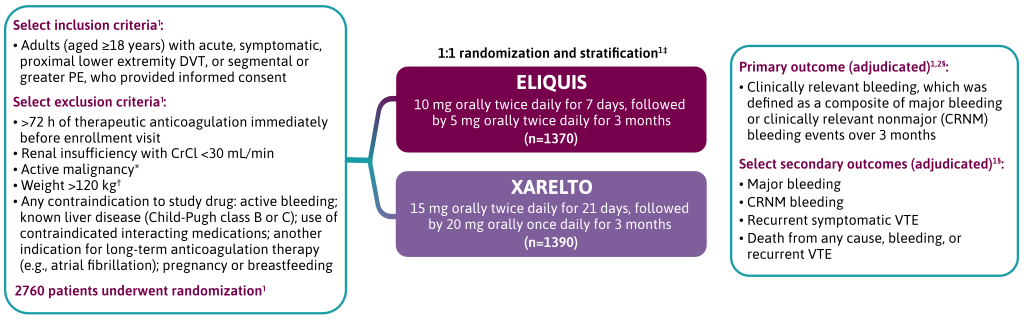
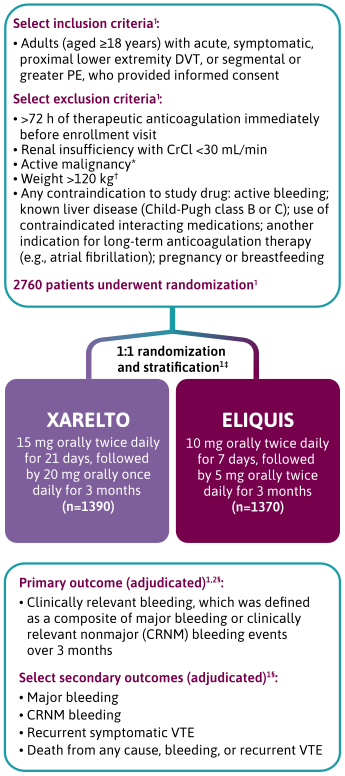
Adults (N=2760) aged ≥18 years with acute, symptomatic, proximal lower extremity DVT, or segmental or greater PE, who met the inclusion and exclusion criteria, were randomized 1:1 to either ELIQUIS 10 mg orally twice daily for 7 days, followed by 5 mg orally twice daily for 3 months (n=1370) or XARELTO 15 mg orally twice daily for 21 days, followed by 20 mg orally once daily for 3 months (n=1390). The primary outcome was adjudicated† clinically relevant bleeding, which was defined as a composite of major bleeding or CRNM bleeding events over 3 months.
† Blinded adjudication of outcome events by central adjudication committee whose members were unaware of the treatment assignments.1
For full context about the COBRRA Trial, please consult the published article in The New England Journal of Medicine. Publication contains information that is not included in the FDA approved Prescribing Information for the products discussed.
Link below directs to a third-party publication. Please abide by the terms of use. BMS and Pfizer are not responsible for the content or for access.
Link does not imply approval or endorsement by The New England Journal of Medicine.
Bleeding Definitions1,2
Major bleeding was defined as overt bleeding accompanied by at least one of the following:
- Fatal bleeding
- Symptomatic bleeding—Bleeding that occurred in a critical area or organ, such as intracranial, intraspinal, intraocular, retroperitoneal, intra-articular or pericardial, or intramuscular with compartment syndrome
- Hemoglobin decrease—Bleeding causing a decrease in hemoglobin of ≥2 g/dL
- Transfusion—Bleeding leading to transfusion of ≥2 units of whole blood or red blood cells
CRNM bleeding was defined as any sign or symptom of hemorrhage that does not fit the criteria for the ISTH® definition of major bleeding but does require at least one of the following: medical intervention by a healthcare professional; hospitalization or increased level of care; or face-to-face evaluation.
ISTH® is a registered trademark of the International Society on Thrombosis and Haemostasis, Inc.
ISTH=International Society on Thrombosis and Haemostasis.
Please review COBRRA in the context of results of the registrational trial, AMPLIFY.
The COBRRA Trial: First head-to-head randomized clinical trial comparing ELIQUIS vs XARELTO® (rivaroxaban) in adults with acute VTE1,2
A multicenter, pragmatic, prospective, randomized, open-label, blinded endpoint (PROBE) trial1
Study objective: To assess whether ELIQUIS was superior to XARELTO with respect to clinically relevant bleeding with
Major bleeding was defined as overt bleeding accompanied by at least one of the following1,2:
- Fatal bleeding
- Symptomatic bleeding—Bleeding that occurred in a critical area or organ, such as intracranial, intraspinal, intraocular, retroperitoneal, intra-articular or pericardial, or intramuscular with compartment syndrome
- Hemoglobin decrease—Bleeding causing a decrease in hemoglobin of ≥2 g/dL
- Transfusion—Bleeding leading to transfusion of ≥2 units of whole blood or red blood cells
CRNM bleeding was defined as any sign or symptom of hemorrhage that does not fit the criteria for the ISTH® definition of major bleeding but does require at least one of the following: medical intervention by a healthcare professional; hospitalization or increased level of care; or face-to-face evaluation.1,2
* Patients with active malignancy were excluded based on LMWH being standard of care at the time of trial design. Active malignancy was defined as any of the following: diagnosis with cancer in the past 6 months; recurrent, regionally advanced, or metastatic disease; currently receiving treatment or having received treatment for cancer ≤6 months prior to randomization; a hematological malignancy not in complete remission.1,5
† Patients weighing >120 kg were excluded in accordance with ISTH guidance at the time of trial design.1,18
‡ Patients were stratified by CrCl <50 mL/min and antiplatelet therapy.1
§ Blinded adjudication of outcome events by central adjudication committee whose members were unaware of the treatment assignments.1
ISTH® is a registered trademark of the International Society on Thrombosis and Haemostasis, Inc.
The New England Journal of Medicine® is a registered trademark of the Massachusetts Medical Society.
XARELTO® (rivaroxaban) is a registered trademark of Bayer Aktiengesellschaft.
COBRRA=Comparison of Bleeding Risk between Rivaroxaban and Apixaban; CrCl=creatinine clearance; CRNM=clinically relevant nonmajor; DVT=deep vein thrombosis; ISTH=International Society on Thrombosis and Haemostasis; LMWH=low-molecular-weight heparin; PE=pulmonary embolism; RCT=randomized clinical trial; VTE=venous thromboembolism.
Limitations of Analysis1
Study design/definitions
- This study was only powered to detect differences in the primary outcome of clinically relevant bleeding between ELIQUIS and XARELTO. It was not powered to detect differences in risk of recurrent VTE or other secondary outcomes
- Treatment phase in this study was defined as 3 months, which differs from the ELIQUIS and XARELTO registrational trials1,3,4
Bias
- This was an open-label study, which could have introduced selection bias
- Emergent data during the trial could have influenced physician perceptions about bleeding risk related to the study drugs
Generalizability
- Although the trial population was consistent with sex and age ratios from registrational trials, and included patients with acute VTE seen in current clinical practice, diversity was limited regarding race and ethnic group1,5
- Patients with weight >120 kg were excluded based on ISTH guidance at the time of trial design, which limits the generalizability of findings for patients with overweight or obesity
- Exclusion of patients with active malignancy limits generalizability for patients with cancer
- Findings from this study are limited to patients with acute VTE and are not generalizable to other indications or clinical settings, such as cancer-associated VTE, extended-duration treatment for prophylaxis of VTE recurrence, and atrial fibrillation
- Results are limited to the first 3 months of treatment. Differences in bleeding risk between ELIQUIS and XARELTO beyond 3 months are unknown
ISTH=International Society for Thrombosis and Haemostasis; VTE=venous thromboembolism.
For full context about the COBRRA Trial, please consult the published article in The New England Journal of Medicine. Publication contains information that is not included in the FDA approved Prescribing Information for the products discussed.
Link below directs to a third-party publication. Please abide by the terms of use. BMS and Pfizer are not responsible for the content or for access.
Link does not imply approval or endorsement by The New England Journal of Medicine.
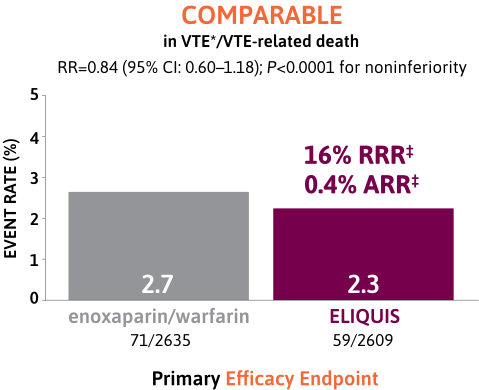
The primary objective of AMPLIFY was to determine whether ELIQUIS was noninferior to enoxaparin/warfarin for the incidence of recurrent VTE* or VTE-related death (primary efficacy endpoint) and major bleeding (primary safety endpoint).3,16
Study design: AMPLIFY was a double-blind study that randomized patients with VTE (N=5400) into 2 groups: those who received ELIQUIS 10 mg twice daily for 7 days followed by 5 mg twice daily for 6 months (n=2693); or standard of care at the time, enoxaparin 1 mg/kg subcutaneously twice daily for at least 5 days (until INR ≥2) followed by warfarin (orally) with a target INR range of 2.0–3.0 for 6 months (n=2707). Patients were assessed up to 6 months after randomization and 30 days after the end of the intended treatment period.3,16
Select inclusion/exclusion criteria: The study included patients aged ≥18 years with objectively confirmed, symptomatic proximal DVT and/or PE, with or without prior parenteral anticoagulation ≤48 hours. Patients were excluded if they: required thrombectomy, insertion of a caval filter, or use of a fibrinolytic agent; had cancer and ≥6 months of LMWH treatment planned; or had one or more of the following: life expectancy <6 months, creatinine clearance <25 mL/min, significant liver disease, mechanical heart valve, atrial fibrillation, or active bleeding.3,19
Baseline characteristics: Approximately 90% of patients in AMPLIFY had an unprovoked DVT/PE at baseline. The 10% of patients with a provoked DVT/PE were required to have an additional ongoing risk factor, which included a previous episode of DVT/PE, immobilization, history of cancer, active cancer, and known prothrombotic genotype.3
Major bleeding was defined as clinically overt bleeding accompanied by ≥1 of the following: A decrease in hemoglobin of ≥2 g/dL; a transfusion of ≥2 units of packed red blood cells; bleeding at ≥1 critical site: intracranial, intraspinal, intraocular, pericardial, intra-articular, intramuscular with compartment syndrome, or retroperitoneal; or fatal bleeding.19
In AMPLIFY, ELIQUIS demonstrated comparable efficacy and superiority in major bleeding events vs enoxaparin/warfarin.3
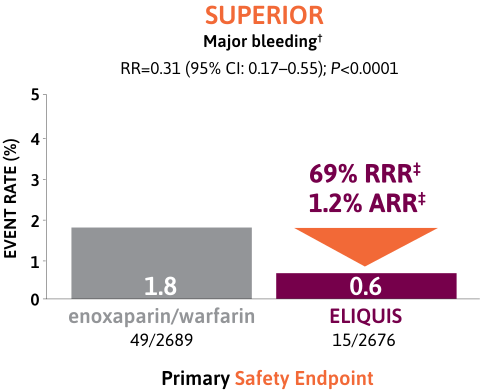
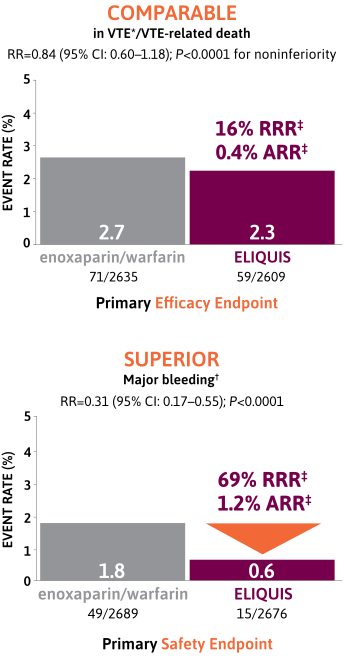
ELIQUIS increases the risk of bleeding and can cause serious, potentially fatal, bleeding.3
- In AMPLIFY, the incidence of VTE-related death for ELIQUIS and enoxaparin/warfarin was 0.4% and 0.6% of patients, respectively. The most commonly observed adverse reactions in ELIQUIS-treated patients (incidence ≥1%) were epistaxis, contusion, hematuria, menorrhagia, hematoma, hemoptysis, rectal hemorrhage, and gingival bleeding
- Discontinuation due to bleeding events in AMPLIFY occurred in 0.7% vs 1.7% of patients treated with ELIQUIS and enoxaparin/warfarin, respectively
Phase 3 results and methodology for XARELTO in the treatment of VTE can be viewed within the XARELTO full Prescribing Information.4
* Recurrent symptomatic VTE (nonfatal DVT or nonfatal PE).16
† Events associated with each endpoint were counted once per subject, but subjects may have contributed events to multiple endpoints.3
‡ Statistical note: RRR was calculated as (1−RR)×100. ARR was calculated as the difference between the event rates and is expressed as percentage points.
XARELTO® (rivaroxaban) is a registered trademark of Bayer Aktiengesellschaft.
ARR=absolute risk reduction; CI=confidence interval; COBRRA=Comparison of Bleeding Risk between Rivaroxaban and Apixaban; DVT=deep vein thrombosis; INR=International Normalized Ratio; LMWH=low-molecular-weight heparin; PE=pulmonary embolism; RCT=randomized clinical trial; RR=relative risk; RRR=relative risk reduction; VTE=venous thromboembolism.
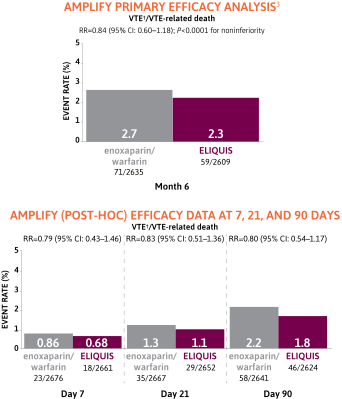
The incidence of recurrent VTE/VTE-related death (efficacy endpoint) and major bleeding (safety endpoint) in the post-hoc analysis was evaluated in patients from the AMPLIFY intention-to-treat population treated with ELIQUIS or enoxaparin/warfarin for 7, 21, and 90 days.
Efficacy analyses included data from patients with a documented outcome status at 7, 21, and 90 days, and at 6 months after randomization. Safety analyses included data obtained at these times from patients during study treatment, defined as the time from administration of the first dose of study drug until 48 hours after the last dose.
In the post-hoc analysis, relative risks for efficacy and safety outcomes at 7, 21, and 90 days were consistent with the primary AMPLIFY analysis at 6 months.
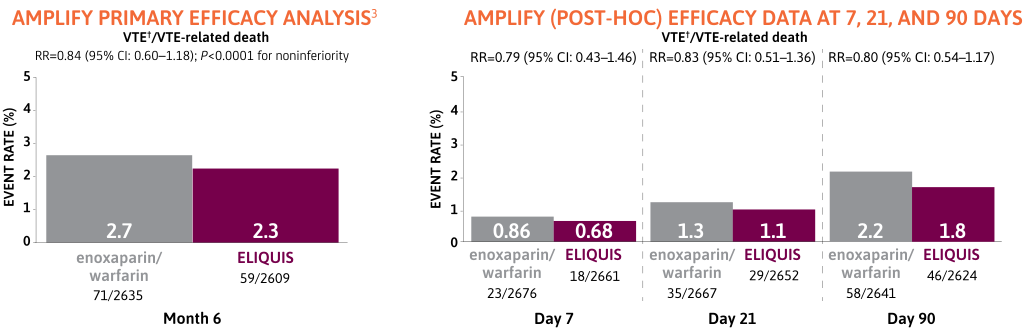
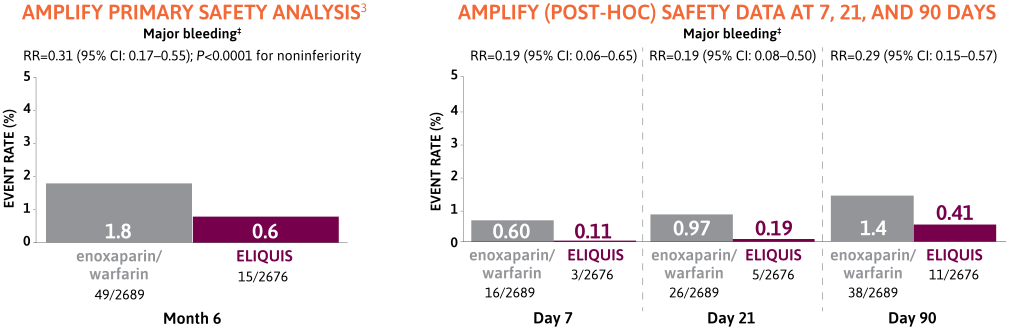
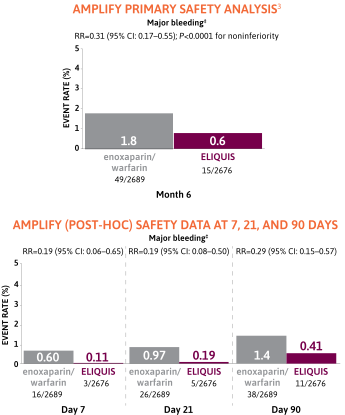
ELIQUIS increases the risk of bleeding and can cause serious, potentially fatal, bleeding.3
Phase 3 results and methodology for XARELTO in the treatment of VTE can be viewed within the XARELTO full Prescribing Information.4
* Time course analysis was not predefined in AMPLIFY.19 Post-hoc analyses are not designed or powered to detect differences. All analyses need cautious interpretation and could represent chance findings.
† Recurrent symptomatic VTE (nonfatal DVT or nonfatal PE).16
‡ For patients with more than one bleeding event, only the first event was counted.20
XARELTO® (rivaroxaban) is a registered trademark of Bayer Aktiengesellschaft.
CI=confidence interval; COBRRA=Comparison of Bleeding Risk between Rivaroxaban and Apixaban; DVT=deep vein thrombosis; PE=pulmonary embolism; RCT=randomized clinical trial; RR=risk reduction; VTE=venous thromboembolism.

References
- Castellucci LA, Chen VM, Kovacs MJ, et al; for the COBRRA Trial Investigators. Bleeding risk with apixaban vs. rivaroxaban in acute venous thromboembolism. N Engl J Med. 2026;394(11):1051-1060. doi:10.1056/NEJMoa2510703
- Castellucci LA, Chen VM, Kovacs MJ, et al; for the COBRRA Trial Investigators. Bleeding risk with apixaban vs. rivaroxaban in acute venous thromboembolism. N Engl J Med. 2026;394(11):1051-1060, Protocol. doi:10.1056/NEJMoa2510703
- Eliquis [package insert]. Bristol-Myers Squibb Company, Princeton, NJ, and Pfizer Inc, New York, NY.
- Xarelto [package insert]. Janssen Pharmaceuticals, Inc., Titusville, NJ.
- Castellucci LA, Chen VM, Kovacs MJ, et al; for the COBRRA Trial Investigators. Bleeding risk with apixaban vs. rivaroxaban in acute venous thromboembolism. N Engl J Med. 2026;394(11):1051-1060, Supplementary appendix. doi:10.1056/NEJMoa2510703
- Dawwas GK, Leonard CE, Lewis JD, Cuker A. Risk for recurrent venous thromboembolism and bleeding with apixaban compared with rivaroxaban: an analysis of real-world data. Ann Intern Med. 2022;175(1):20-28. doi:10.7326/M21-0717
- Jin MC, Sussman ES, Feng AY, et al. Hemorrhage risk of direct oral anticoagulants in real-world venous thromboembolism patients. Thromb Res. 2021;204:126-133. doi:10.1016/j.thromres.2021.06.015
- Aryal MR, Gosain R, Donato A, et al. Systematic review and meta-analysis of the efficacy and safety of apixaban compared to rivaroxaban in acute VTE in the real world. Blood Adv. 2019;3(15):2381-2387. doi:10.1182/bloodadvances.2019000572
- Mantha S, Ansell J. Indirect comparison of dabigatran, rivaroxaban, apixaban and edoxaban for the treatment of acute venous thromboembolism. J Thromb Thrombolysis. 2015;39(2):155-165. doi:10.1007/s11239-014-1102-5
- Sindet-Pedersen C, Staerk L, Pallisgaard JL, et al. Safety and effectiveness of rivaroxaban and apixaban in patients with venous thromboembolism: a nationwide study. Eur Heart J Cardiovasc Pharmacother. 2018;4(4):220-227. doi:10.1093/ehjcvp/pvy021
- Cohen AT, Hamilton M, Mitchell SA, et al. Comparison of the novel oral anticoagulants apixaban, dabigatran, edoxaban, and rivaroxaban in the initial and long-term treatment and prevention of venous thromboembolism: systematic review and network meta-analysis. PLoS One. 2015;10(12):e0144856. doi:10.1371/journal.pone.0144856
- Lutsey PL, Zakai NA, MacLehose RF, et al. Risk of hospitalised bleeding in comparisons of oral anticoagulant options for the primary treatment of venous thromboembolism. Br J Haematol. 2019;185(5):903-911. doi:10.1111/bjh.15857
- Bott-Kitslaar DM, McBane RD, Casanegra AI, et al. Apixaban and rivaroxaban in patients with acute venous thromboembolism. Mayo Clin Proc. 2019;94(7):1242-1252. doi:10.1016/j.mayocp.2018.09.022
- Howe Z, Naville-Cook C, Cole D. Bleeding rates of veterans taking apixaban or rivaroxaban for atrial fibrillation or venous thromboembolism. J Thromb Thrombolysis. 2019;47(2):280-286. doi:10.1007/s11239-018-1770-7
- Bea S, Iyer GS, Kim DH, et al. Oral anticoagulation and risk of adverse clinical outcomes in venous thromboembolism. JAMA Intern Med. 2025;185(7):837-846. doi:10.1001/jamainternmed.2025.1109
- Agnelli G, Buller HR, Cohen A, et al; for the AMPLIFY Investigators. Oral apixaban for the treatment of acute venous thromboembolism. N Engl J Med. 2013;369(9):799-808. doi:10.1056/NEJMoa1302507
- Hannan EL. Randomized clinical trials and observational studies: guidelines for assessing respective strengths and limitations. JACC Cardiovasc Interv. 2008;1(3):211-217. doi:10.1016/j.jcin.2008.01.008
- Martin KA, Beyer-Westendorf J, Davidson BL, Huisman MV, Sandset PM, Moll S. Use of direct oral anticoagulants in patients with obesity for treatment and prevention of venous thromboembolism: updated communication from the ISTH SSC Subcommittee on Control of Anticoagulation. J Thromb Haemost. 2021;19(8):1874-1882. doi:10.1111/jth.15358
- Agnelli G, Buller HR, Cohen A, et al; for the AMPLIFY Investigators. Oral apixaban for the treatment of acute venous thromboembolism. N Engl J Med. 2013;369(9):799-808, Protocol. doi:10.1056/NEJMoa1302507
- Raskob GE, Gallus AS, Sanders P, et al. Early time courses of recurrent thromboembolism and bleeding during apixaban or enoxaparin/warfarin therapy. A sub-analysis of the AMPLIFY trial. Thromb Haemost. 2016;115(4):809-816. doi:10.1160/TH15-09-0752
432-US-2600093 06/26
WARNING: (A) PREMATURE DISCONTINUATION OF ELIQUIS INCREASES THE RISK OF THROMBOTIC EVENTS, (B) SPINAL/EPIDURAL HEMATOMA
(A) Premature discontinuation of any oral anticoagulant, including ELIQUIS® (apixaban), increases the risk of thrombotic events. If anticoagulation with ELIQUIS is discontinued for a reason other than pathological bleeding or completion of a course of therapy, consider coverage with another anticoagulant.
(B) Epidural or spinal hematomas may occur in patients treated with ELIQUIS who are receiving neuraxial anesthesia or undergoing spinal puncture. These hematomas may result in long-term or permanent paralysis. Consider these risks when scheduling patients for spinal procedures. Factors that can increase the risk of developing epidural or spinal hematomas in these patients include:
- use of indwelling epidural catheters
- concomitant use of other drugs that affect hemostasis, such as nonsteroidal anti-inflammatory drugs (NSAIDs), platelet inhibitors, other anticoagulants
- a history of traumatic or repeated epidural or spinal punctures
- a history of spinal deformity or spinal surgery
- optimal timing between the administration of ELIQUIS and neuraxial procedures is not known
Monitor patients frequently for signs and symptoms of neurological impairment. If neurological compromise is noted, urgent treatment is necessary.
Consider the benefits and risks before neuraxial intervention in patients anticoagulated or to be anticoagulated.
- Active pathological bleeding
- Severe hypersensitivity reaction to ELIQUIS (e.g., anaphylactic reactions)
- Increased Risk of Thrombotic Events after Premature Discontinuation: Premature discontinuation of any oral anticoagulant, including ELIQUIS, in the absence of adequate alternative anticoagulation increases the risk of thrombotic events. An increased rate of stroke was observed during the transition from ELIQUIS to warfarin in clinical trials in atrial fibrillation patients. If ELIQUIS is discontinued for a reason other than pathological bleeding or completion of a course of therapy, consider coverage with another anticoagulant.
- Bleeding Risk: ELIQUIS increases the risk of bleeding and can cause serious, potentially fatal, bleeding.
- Concomitant use of drugs affecting hemostasis increases the risk of bleeding, including aspirin and other antiplatelet agents, other anticoagulants, heparin, thrombolytic agents, SSRIs, SNRIs, and NSAIDs.
- Advise patients of signs and symptoms of blood loss and to report them immediately or go to an emergency room. Discontinue ELIQUIS in patients with active pathological hemorrhage.
- The anticoagulant effect of apixaban can be expected to persist for at least 24 hours after the last dose (i.e., about two half-lives). An agent to reverse the anti-factor Xa activity of apixaban is available for adults. Please visit www.andexxa.com for more information on availability of a reversal agent.
- Spinal/Epidural Anesthesia or Puncture: Patients treated with ELIQUIS undergoing spinal/epidural anesthesia or puncture may develop an epidural or spinal hematoma which can result in long-term or permanent paralysis. The risk of these events may be increased by the postoperative use of indwelling epidural catheters or the concomitant use of medicinal products affecting hemostasis. Indwelling epidural or intrathecal catheters should not be removed earlier than 24 hours after the last administration of ELIQUIS. The next dose of ELIQUIS should not be administered earlier than 5 hours after the removal of the catheter. The risk may also be increased by traumatic or repeated epidural or spinal puncture. If traumatic puncture occurs, delay the administration of ELIQUIS for 48 hours. Monitor patients frequently and if neurological compromise is noted, urgent diagnosis and treatment is necessary. Physicians should consider the potential benefit versus the risk of neuraxial intervention in ELIQUIS patients.
- Prosthetic Heart Valves: The safety and efficacy of ELIQUIS have not been studied in patients with prosthetic heart valves and is not recommended in these patients.
- Acute PE in Hemodynamically Unstable Patients or Patients who Require Thrombolysis or Pulmonary Embolectomy: Initiation of ELIQUIS is not recommended as an alternative to unfractionated heparin for the initial treatment of patients with PE who present with hemodynamic instability or who may receive thrombolysis or pulmonary embolectomy.
- Increased Risk of Thrombosis in Patients with Triple Positive Antiphospholipid Syndrome (APS): Direct-acting oral anticoagulants (DOACs), including ELIQUIS, are not recommended for use in patients with triple-positive APS. For patients with APS (especially those who are triple positive [positive for lupus anticoagulant, anticardiolipin, and anti–beta 2-glycoprotein I antibodies]), treatment with DOACs has been associated with increased rates of recurrent thrombotic events compared with vitamin K antagonist therapy.
- The most common and most serious adverse reactions reported with ELIQUIS were related to bleeding in adult patients.
- ELIQUIS should be discontinued at least 48 hours prior to elective surgery or invasive procedures with a moderate or high risk of unacceptable or clinically significant bleeding. ELIQUIS should be discontinued at least 24 hours prior to elective surgery or invasive procedures with a low risk of bleeding or where the bleeding would be noncritical in location and easily controlled. Bridging anticoagulation during the 24 to 48 hours after stopping ELIQUIS and prior to the intervention is not generally required. ELIQUIS should be restarted after the surgical or other procedures as soon as adequate hemostasis has been established.
- Combined P-gp and Strong CYP3A4 Inhibitors: Inhibitors of P-glycoprotein (P-gp) and cytochrome P450 3A4 (CYP3A4) increase exposure to apixaban and increase the risk of bleeding. For patients receiving ELIQUIS doses of 5 mg or 10 mg twice daily, reduce the dose of ELIQUIS by 50% when ELIQUIS is coadministered with drugs that are combined P-gp and strong CYP3A4 inhibitors (e.g., ketoconazole, itraconazole, or ritonavir). In patients already taking 2.5 mg twice daily, avoid coadministration of ELIQUIS with combined P-gp and strong CYP3A4 inhibitors. Clarithromycin Although clarithromycin is a combined P-gp and strong CYP3A4 inhibitor, pharmacokinetic data suggest that no dose adjustment is necessary with concomitant administration with ELIQUIS.
- Combined P-gp and Strong CYP3A4 Inducers: Avoid concomitant use of ELIQUIS with combined P-gp and strong CYP3A4 inducers (e.g., rifampin, carbamazepine, phenytoin, St. John’s wort) because such drugs will decrease exposure to apixaban.
- Anticoagulants and Antiplatelet Agents: Coadministration of antiplatelet agents, fibrinolytics, heparin, aspirin, and chronic NSAID use increases the risk of bleeding. APPRAISE-2, a placebo-controlled clinical trial of apixaban in high-risk post-acute coronary syndrome patients treated with aspirin or the combination of aspirin and clopidogrel, was terminated early due to a higher rate of bleeding with apixaban compared to placebo.
- The limited available data on ELIQUIS use in pregnant women are insufficient to inform drug-associated risks of major birth defects, miscarriage, or adverse developmental outcomes. Treatment may increase the risk of bleeding during pregnancy and delivery, and in the fetus and neonate.
- Labor or delivery: ELIQUIS use during labor or delivery in women who are receiving neuraxial anesthesia may result in epidural or spinal hematomas. Consider use of a shorter acting anticoagulant as delivery approaches.
- Breastfeeding is not recommended during treatment with ELIQUIS.
- Females of reproductive potential requiring anticoagulation should discuss pregnancy planning with their physician. The risk of clinically significant uterine bleeding, potentially requiring gynecological surgical interventions, identified with oral anticoagulants including ELIQUIS should be assessed in these patients and those with abnormal uterine bleeding.
ELIQUIS is indicated to reduce the risk of stroke and systemic embolism in adult patients with nonvalvular atrial fibrillation (NVAF).
ELIQUIS is indicated for the prophylaxis of deep vein thrombosis (DVT), which may lead to pulmonary embolism (PE), in adult patients who have undergone hip or knee replacement surgery.
ELIQUIS is indicated for the treatment of adults with DVT and PE, and to reduce the risk of recurrent DVT and PE following initial therapy.
Please see U.S. FULL PRESCRIBING INFORMATION, including Boxed WARNINGS, and MEDICATION GUIDE.
ELIQUIS is available in 2.5 mg and 5 mg tablets.

© 2025 Bristol-Myers Squibb Company. 432-US-2500240 07/25